MicroUAV-2D
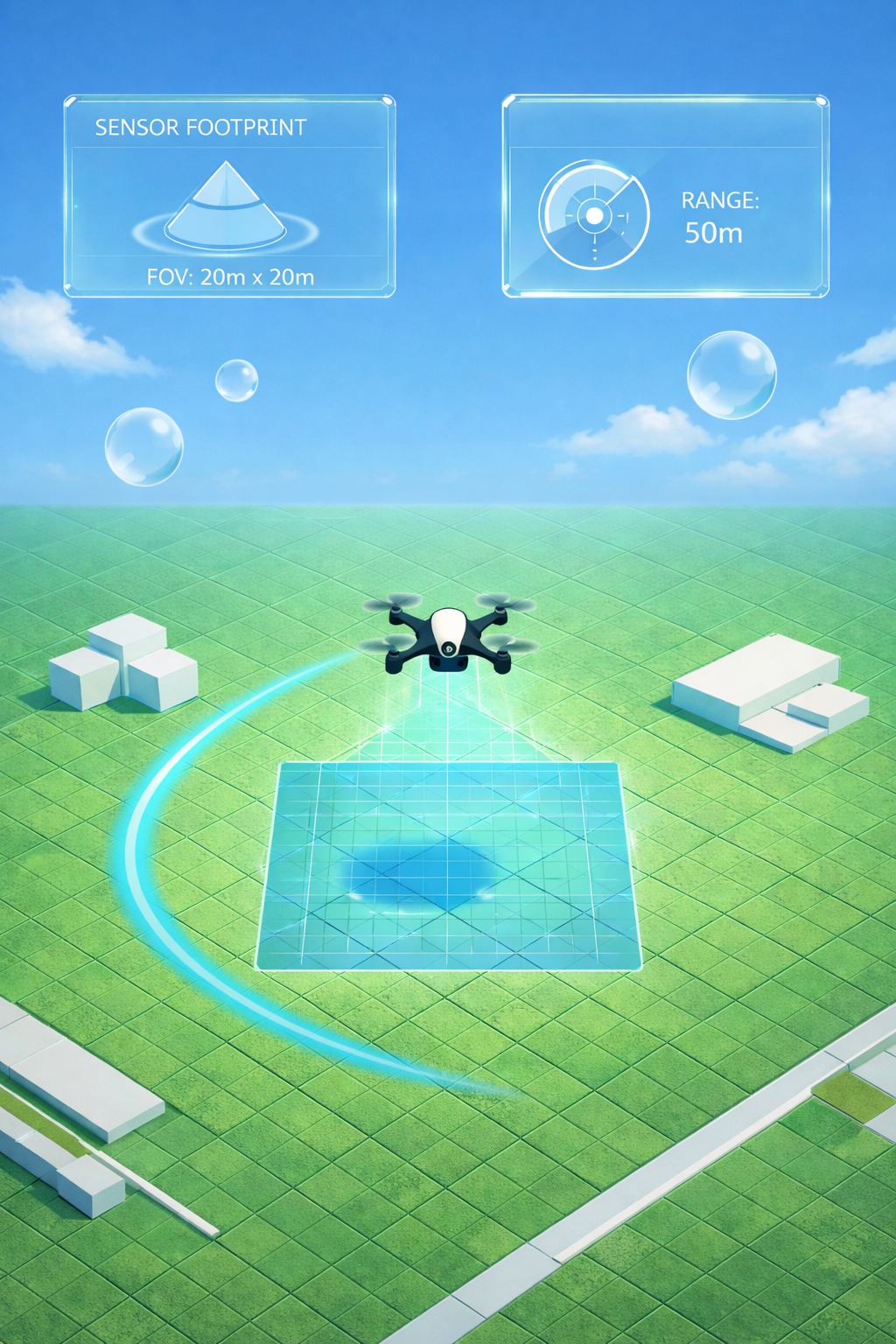
MicroUAV-2D is an ultra-lightweight UAV simulation sandbox engineered for rapid experimentation with vision-driven navigation and autonomy algorithms. The platform models a downward-facing aerial vehicle operating over overhead imagery, exposing a clean perception-to-action interface where navigation policies interact directly with the drone’s sensor footprint through configurable field-of-view observations. Built entirely on a minimal NumPy and OpenCV stack, the simulator delivers deterministic observation extraction, stable border handling, and real-time visualization without relying on heavyweight robotics frameworks, physics engines, or GPU infrastructure. The entire simulation core is exceptionally compact, consisting of roughly 17 KB of source code (excluding the base map image), making it dramatically smaller than conventional robotics simulators that typically span hundreds of megabytes. This extreme simplicity enables instant startup, rapid iteration, and frictionless deployment across machines while preserving the essential perception–action loop required for aerial autonomy research. By stripping simulation down to the fundamental interaction between observation, decision, and motion, MicroUAV-2D serves as a fast prototyping environment for reinforcement learning policies, navigation strategies, and perception-guided control systems for lightweight UAV platforms. Its minimal architecture makes it ideal for researchers and engineers who need a fast, transparent sandbox to prototype aerial autonomy without the overhead of complex simulation ecosystems.
UAV Simulator
Lightweight Framework
Rapid Prototyping
Open Repository